There are many ways to see Egypt.
You can stand beneath the pyramids, walk through ancient temples, sail the Nile, and gaze upon treasures created thousands of years ago.
But there is another way to experience Egypt – one that takes you beyond the familiar routes, beyond the crowds, and sometimes beyond the doors that remain closed to almost everyone else.
For more than two decades, Archaeological Paths has created journeys designed around one simple idea: if you are going to travel halfway around the world to experience one of history’s greatest civilizations, you should experience it in a way you will never forget.
Imagine arriving at the Giza Plateau before the usual crowds appear. The pyramids rise from the desert almost in silence. Soon, thousands of visitors will fill the site. But for a precious window of time, it feels as though ancient Egypt belongs to you.
Then imagine stepping inside the Great Pyramid itself – not simply following the standard public route, but entering chambers and areas that ordinary visitors may never see.
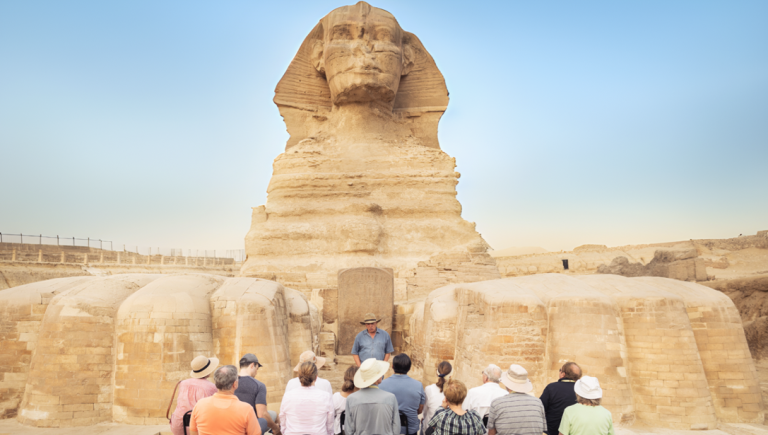
Or standing between the paws of the Great Sphinx, inside an enclosure normally viewed from behind barriers, with the world’s most famous archaeologist, Dr. Zahi Hawass, explaining the mysteries that continue to surround this extraordinary monument.
These are the kinds of moments around which Archaeological Paths builds its Egypt journeys.
Where Archaeology Is Still Happening
Egypt is not a finished story.
Every year, new tombs are uncovered, ancient cities emerge from beneath the sand, and discoveries reshape what archaeologists thought they knew about the civilization that flourished along the Nile.
Archaeological Paths’ guests are placed remarkably close to that process.
At Abu Sir, travelers may enter the Pyramid of Sahure with special access and listen to a private lecture from Dr. Mohamed Ismail, one of Egypt’s leading antiquities officials, inside the monument itself.
At Saqqara, guests may step inside the remarkably preserved Tomb of Wahtye, a 4,400-year-old burial chamber whose vivid colors and intricate scenes stunned the archaeological world when it was discovered.
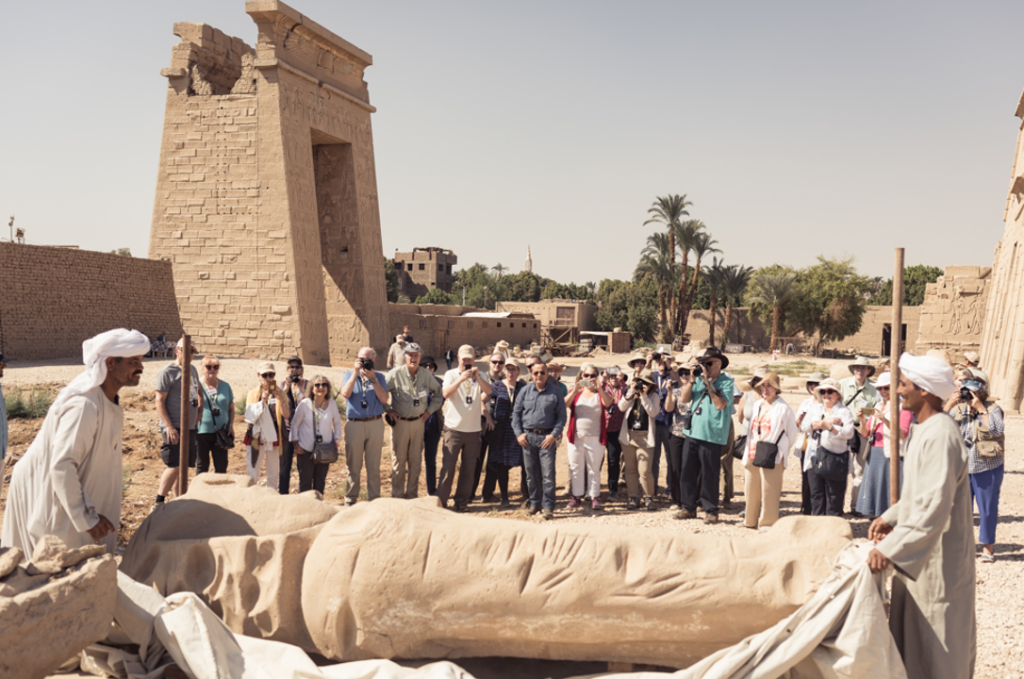
And in Luxor lies one of the most extraordinary archaeological discoveries of recent years: the Lost Golden City.
Unearthed under the direction of Dr. Zahi Hawass, the settlement dates to the reign of Amenhotep III and has offered archaeologists an extraordinary glimpse into everyday life during one of ancient Egypt’s most powerful periods.
For most travelers, archaeological discoveries are something to read about later. For Archaeological Paths guests, they can become part of the journey itself. That difference is difficult to explain until you experience it.
It is one thing to hear that archaeologists have discovered something extraordinary.
It is quite another to stand where they discovered it.
Travel With the People Behind the Discoveries
Perhaps the greatest privilege of these journeys is not simply where you go, but who takes you there.
For years, Archaeological Paths has worked closely with Dr. Zahi Hawass, one of the most recognizable figures in modern archaeology.
Guests do not merely hear his name during the tour. They meet him, listen to him speak about his discoveries, and gain insight directly from a man whose career has been devoted to uncovering the secrets of ancient Egypt.
Depending on the journey, travelers may also meet other leading archaeologists, Egyptologists, museum directors, antiquities officials, and researchers whose work is shaping our understanding of Egypt today.

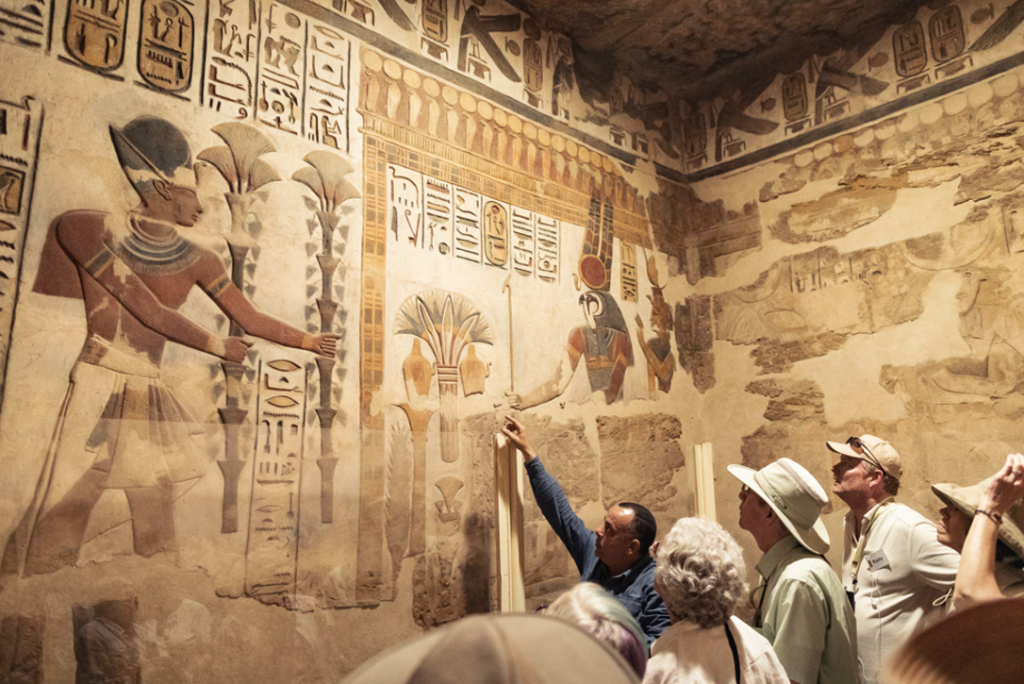
The result is something very different from a conventional guided tour.
A temple is no longer simply a temple when the person beside you can explain what archaeologists have discovered beneath it.
A tomb takes on a different meaning when you hear directly from the people who excavated it.
And a mystery becomes far more compelling when you realize that the answer may still be buried somewhere beneath your feet.
The “Eclipse of the Century”
And in August 2027, something will happen above Egypt that no amount of archaeological access can recreate.
On August 2, a total solar eclipse will pass over Luxor, plunging the ancient landscape into darkness for more than six minutes.
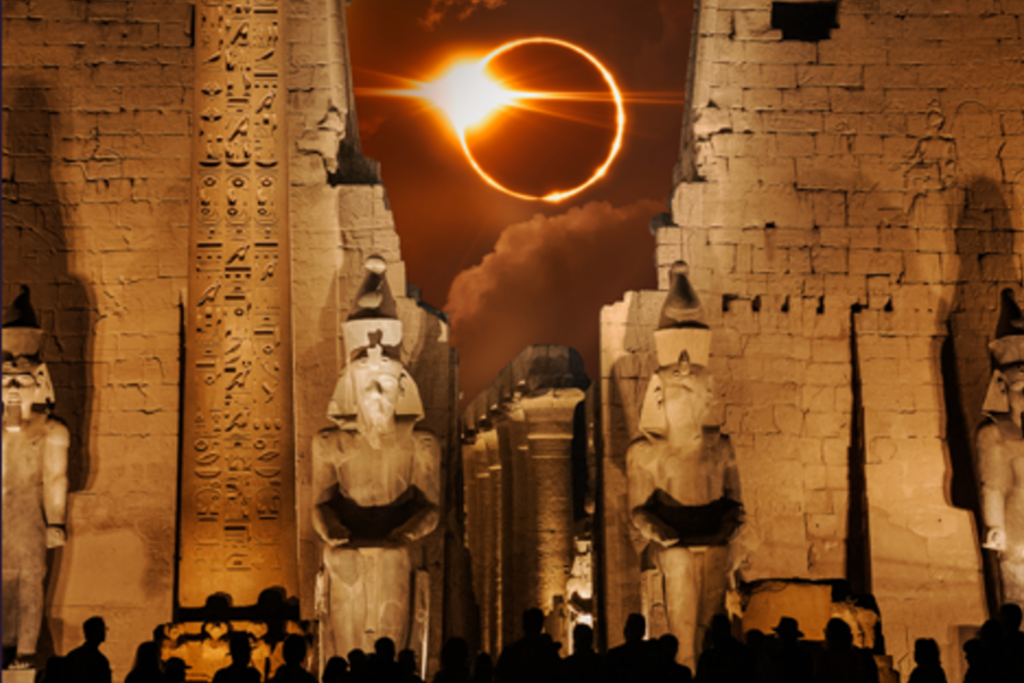
For centuries, people have looked to the Egyptian sky with wonder. The sun shaped religion, architecture, kingship, and daily life throughout ancient Egyptian civilization.
In 2027, travelers will have the chance to witness one of nature’s most extraordinary phenomena in the very landscape where solar symbolism once stood at the heart of an empire.
Archaeological Paths’ Solar Eclipse journeys have been designed to make that moment part of a much larger story.
Guests will travel through Egypt’s ancient monuments, meet leading experts, explore archaeological sites, and ultimately arrive in Luxor for the eclipse itself.
And the setting could hardly be more remarkable.
The eclipse will be experienced at the Lost Golden City – the ancient settlement discovered by Dr. Hawass and a place deeply tied to the world of Amenhotep III and the religious transformations that would soon follow under his son, Akhenaten.
To witness totality here is not simply to watch the moon pass in front of the sun. It is to experience a rare celestial event surrounded by thousands of years of human history.
More Than an Eclipse
The eclipse may be the defining moment of the journey, but it is not the only reason to travel.
Guests will still experience the Egypt that has made Archaeological Paths journeys distinctive for decades: extraordinary archaeological access, private encounters with experts, remarkable monuments, five-star accommodations, Nile cruising, and the sense that each day may reveal something unexpected.

There is also something uniquely compelling about the timing.
Egypt is entering another remarkable period of archaeological discovery. Excavations continue. New evidence is emerging. Sites that were unknown a few years ago are now becoming part of the story.
By 2027, there may be discoveries we cannot yet name. That is perhaps the most exciting part.
You know you will see the pyramids. You know you will walk through temples built by pharaohs. You know that on August 2, the moon will cover the sun above Luxor.
But you do not know what archaeologists may uncover between now and the moment you arrive.
And with Archaeological Paths, there is always the possibility that you may find yourself closer to that discovery than you ever imagined.