Interview with author Harvey Sawler
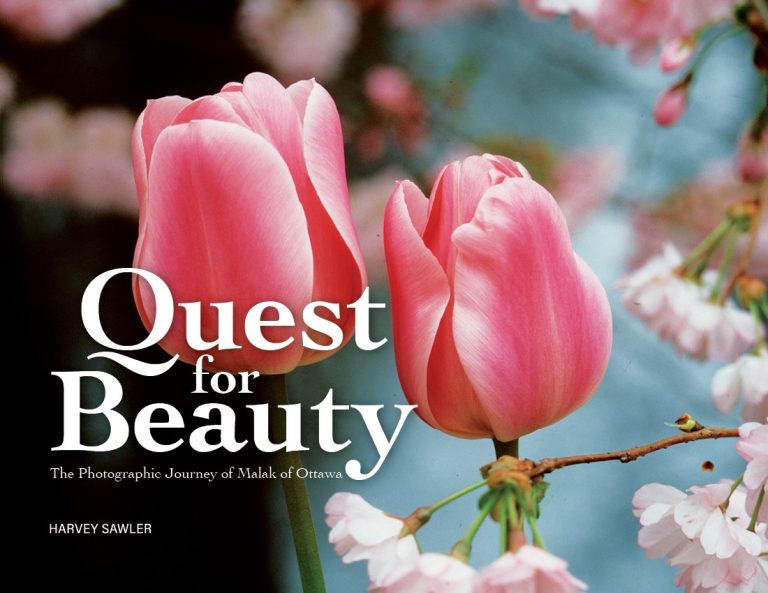
With an eye-catching close-up of tulips gracing the front cover, Quest for Beauty: The Photographic Journey of Malak of Ottawa is undoubtedly a pride-of-place coffee table book for your home. But it is so much more than a volume of pretty pictures. This authorized biography of beloved Canadian photographer Malak Karsh takes us along on his quest from the Karsh family’s exodus from Turkey during the 1915 Armenian genocide, on to a storied life in Canada filled with colour, beauty and joy.
Brother of world-renowned portrait photographer, Yousuf Karsh, Malak loved Canada and wherever he travelled, the country’s landscapes awakened his imagination. In Malak’s words, “I have always felt proud to be able to say, ‘All of this is my country, and I am both fortunate and grateful to be a part of it.’” Set largely in Ottawa and Gatineau, the region that shaped Malak’s artistic journey, Quest for Beauty also follows his enduring passion for floral photography, especially tulips.
Author Harvey Sawler has written a wonderful testament to this brilliant photographic artist in Quest for Beauty. Here are some excerpts from my conversation with Harvey, where he shared recollections of his time working with Malak, and insights based on two years of research with Malak’s son, Sidney Karsh, for which he is ever grateful.
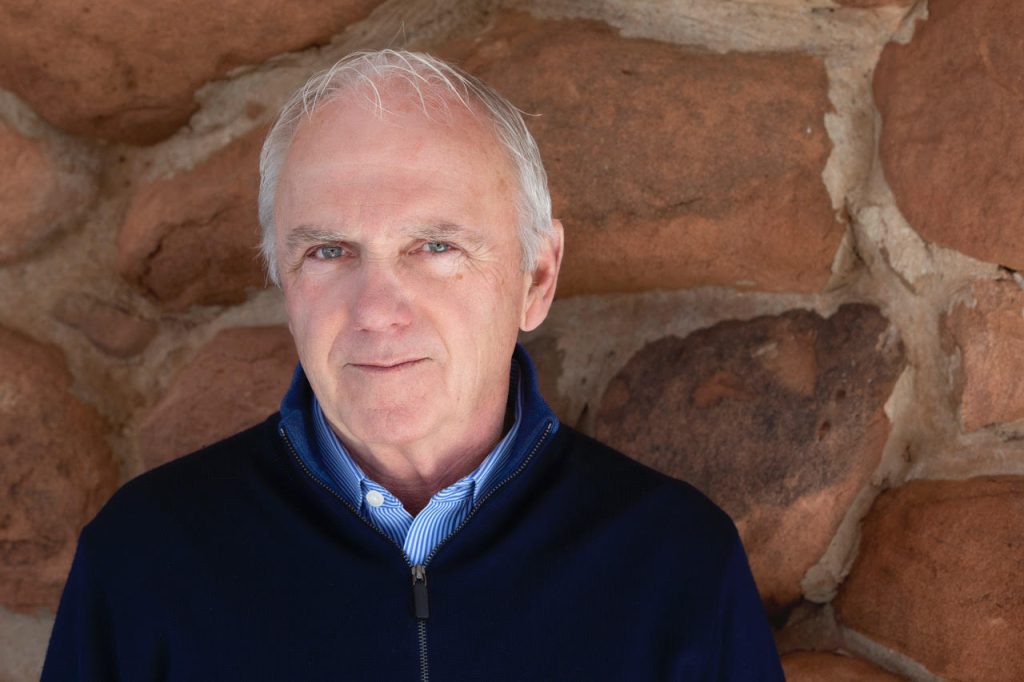
H: How did Malak Karsh start his photography career in Canada?
Harvey: Malak was born two months before the start of the Armenian insurrection and genocide. It started right in his hometown, Mardin, where tens of thousands of mostly men were slaughtered within a very short time. So, the family became refugees. They walked to Aleppo, Syria, with their donkey and very little else and were lucky to get there. One thing led to another and Malak’s brother Yousuf ended up in Canada with an uncle who was already here. Malak came later in 1937. Malak took the opposite route from portraiture, which was Yousuf’s forte, and went into landscape photography. For the brothers, this quest for finding and capturing beauty is no doubt the counterpoint to having seen death and fleeing from their home as children.
H: What was it like working with Malak?
Harvey: I first met Malak 50 years ago, in 1976, and worked with him for 3 weeks. I was the photo technician at Tourism PEI, which meant I managed the images for the brochures and wrote all the copy. I was 22 and Malak was 61 at the time. I was told to spend 3 weeks with him on the road; 21 consecutive days, about 18 hours a day. He was absolutely driven… and so off I went with him on this adventure.
The thing I learned about Malak during those three weeks was that he was so technically proficient to the point it would drive you mad. If we went to do a single shot setup of a boat coming into a harbour or some kids playing by a river, he used Polaroid test packs on the back of his Hasselblad camera. He always took several ladders of various heights everywhere he went, and he would do test after test, while standing on a ladder. He faced the potential of losing light while doing all these tests, but he wanted to get everything perfect.
When he was satisfied with the test packs, he would shoot incessantly to get everything he wanted. He had a station wagon in those days and we’d pack everything back up, including the ladders, and drive maybe half a kilometre, then he’d say “Stop, stop!” because he’d seen some lupines (one of his favourite flowers) growing in the ditch. In PEI, they are prolific in the fields and ditches in June and July. So off would come the ladders and the gear and we’d go right back at it again. Malak was insatiable.
Later, he worked for me when I was director of PR at the Charlottetown Festival, marketing Anne of Green Gables. I wanted a new cover for the Festival brochures, so we flew the actress in from Toronto with her costume and did a shoot in the studio. That was around 1980. So, while I didn’t have constant contact with Malak, it was memorable.

H: I wonder what he would think about how photography has evolved today…
Harvey: He was so technologically astute that he would have been all over it. Yousuf was proficient in black and white, as a portrait photographer. Malak’s earliest photos were also in black and white, but when he found Kodachrome, and he found colour in life and colour in film, he became obsessed with it. That was a huge turning point. The quality of colour film was his thing. When he travelled, he kept all the film he created in freezer packs in his car, because they couldn’t last in the heat. He seized colour with a vengeance.
H: While researching the book, did any images become anchor points for shaping the narrative?
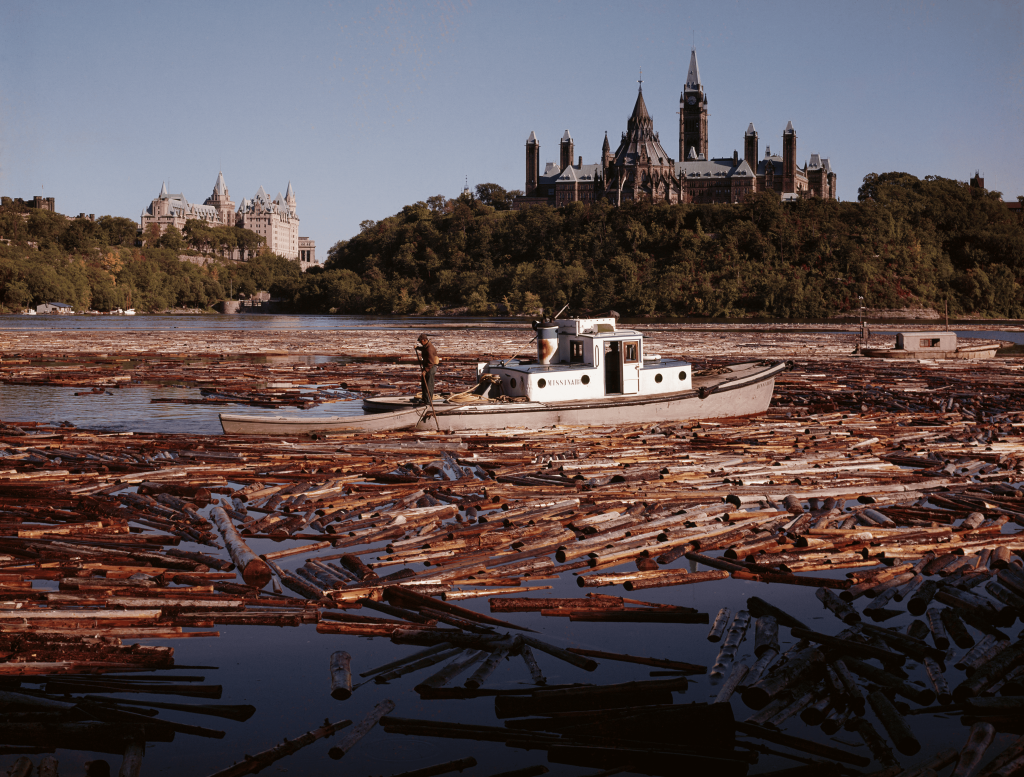
Harvey: There are cornerstone images in black and white, and also in colour. Of the black and white, one of the most renowned, award-winning images was called The Happy Baker and you’ll find that in the book. Malak was working for the logging industry, photographing logging on the Gatineau River. He actually stayed at the logging camp with the guys – it was total immersion, that was the way he’d go about it.
Another was a shot for a textile company; an unbelievable photo of 12 babies on a blanket. Another one was taken during WWII, when children from London, England, were sent to Ottawa for safety. Malak wanted to photograph them on a staircase and he hired a couple of clowns to be at the top of the stairs. It’s a beautiful winding wood staircase and the kids are lining the rail all the way up the stairs, staring at the clowns that you can’t see and laughing. These are some of the most striking black and white images and you’ll see them in the book.
In terms of colour, Malak’s favourite scene was the Parliament Buildings in Ottawa. He photographed them millions of times. Canada Day fireworks shots and numerous interior and exterior views, like up in the rotunda overlooking the parliamentary library. Breathtaking images. Apart from landscapes in Canada and flowers, the Parliament Buildings were his main obsession. He would even go out in the middle of storms to get different viewpoints. Malak was always taking risks, doing things he shouldn’t, to get the shot. He basically fell in the river in Gatineau during the logging shoot.
Quest for Beauty is available from University of Ottawa Press (PUO-UOP) Press.uOttawa.ca
Did you know?
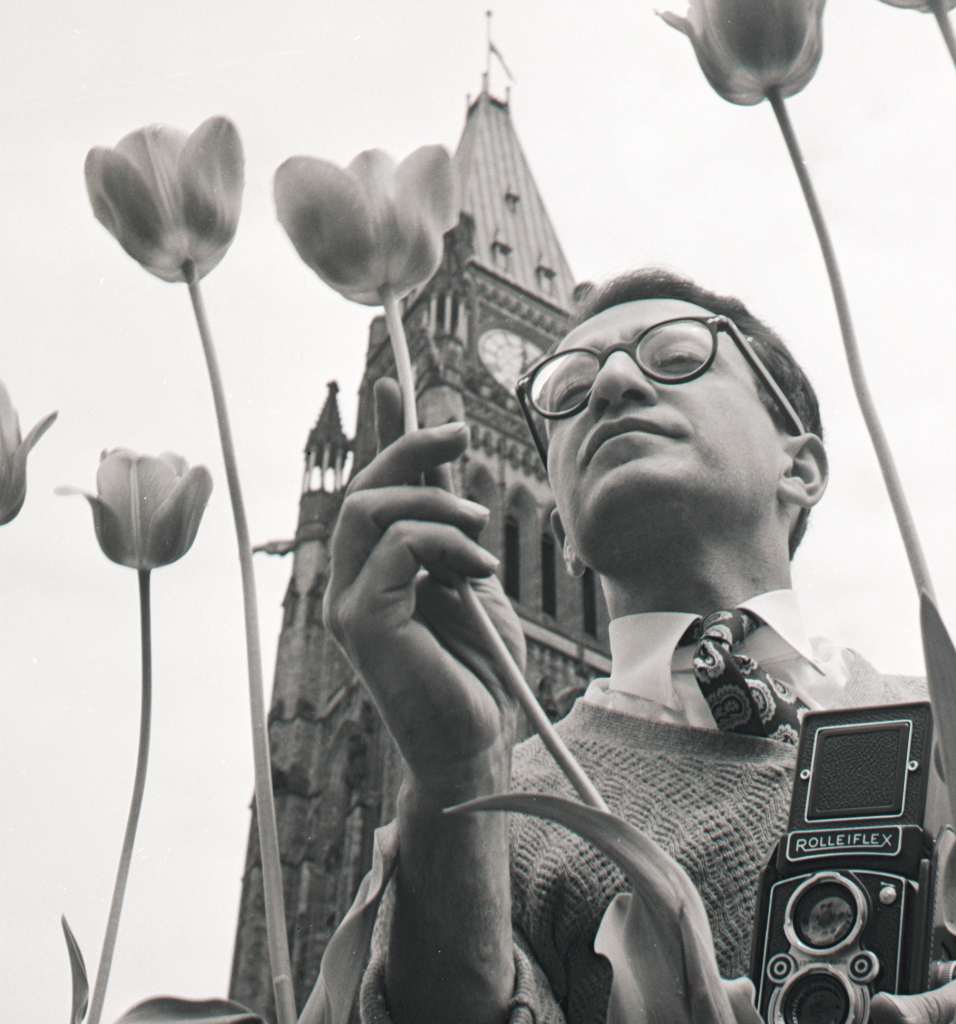
Malak Karsh created the Canadian Tulip Festival in Ottawa. (Read the fascinating story in Quest for Beauty!) In his book, Canada the Land That Shapes Us, Malak wrote: “The photographs I took of tulips with the Peace Tower and the National War Memorial were published extensively in Canada and many other countries. After seeing my photographs, the Associated Bulb Growers of Holland appointed me their official photographer and Canadian representative.”
Malak is also the reason you can skate on the Rideau. He was often in Holland year-round and kept seeing people skating on the canals. Back in Canada, he talked to the National Capital Commission and Parks Canada and they determined there was a technological way to make the Rideau River into a rink. Malak always had big ideas, that’s just the way he functioned. malakofottawa.ca
* Harvey Sawler has written 19 fiction and non-fiction books, covering the spectrum from celebrity, business and crime to travel and entertainment. Born in Hamilton, Ontario, he has lived most of his adult life in Atlantic Canada, currently in Bellevue Cove, PEI. In addition to writing, he is a leading Canadian tourism consultant. Visit him at harveysawler.com harveysawlerstories.com/