The Painted Ladies of Grimsby Beach
A Colourful Experience You Won’t Soon Forget
By Michelle Mahoney
With its sparkling views of Lake Ontario and a downtown brimming with activity, the town of Grimsby is a great place to spend a day. For something truly memorable, make Grimsby Beach part of the adventure, where you’ll find a neighbourhood bursting with colour and personality. A walk through its cheerful streets feels like wandering into the pages of a storybook, with the houses adorned in whimsical palettes and creativity unfolding around every corner.
Grimsby’s Painted Ladies on Parade
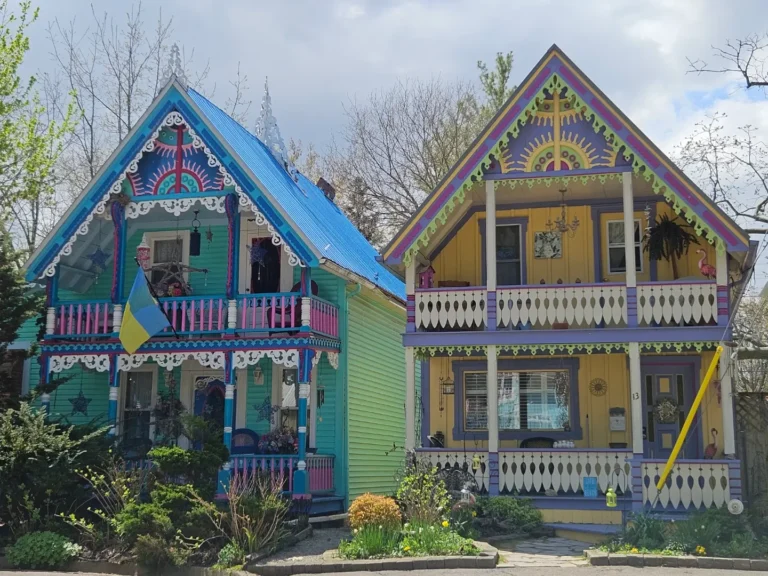
More gingerbread cottage than Victorian dame, these charming abodes are Grimsby’s answer to the famous Painted Ladies of San Francisco. Showcasing earthy oranges and golds, vibrant jewel tones and fresh pastels, each home is adorned with a combination of carefully chosen colours that bring every architectural feature to life. From the scrollwork along eaves, porches and gables to ornate spindles and decorative brackets, every detail comes together to create a true feast for the eyes.
Beyond mere buildings, these houses are beautiful works of art, each seeming like a heartfelt labour of love. If you look long enough, you will start to notice all the extra flourishes – the wooden birds, seahorses, flowers and even mermaids that add another dash of whimsy to the already brilliant cottage vibe. Adding to the appeal, the neighbourhood itself blooms with a lush tapestry of gardens, trees and greenspace, introducing still more colour and character. Creatively designed fences, sheds and adorable little libraries dot the landscape, further enhancing the fun and flavour of the community.
From Tents to Historic Treasures
Grimsby Beach got its start in the mid 1800s as a bustling Methodist campground. Humble canvas tents evolved into wooden cottages, paving the way for the colourfully embellished homes that make the area so special. This history is proudly remembered throughout the community, where a stone monument marks the spot of the very first camp meeting in 1859. Many of the enchanting gingerbread houses still standing were built before 1945 and are protected under the Ontario Heritage Act.
Over time, the area transitioned from a religious retreat to a lively summer destination, eventually transforming into the playful community it is today. Now a residential neighbourhood, visitors flock to Grimsby Beach to admire the surroundings and experience the one-of-a-kind atmosphere that feels like stepping into another world.
Plan Your Visit
As you tour around, you’ll notice that many of the properties display a small, framed sign, stating “PLEASE ENJOY OUR HOMES FROM THE ROAD ONLY” – a not so subtle, but perfectly reasonable reminder. The narrow streets of Grimsby Beach are excellent for walking, giving you lots of opportunity to stop and admire the sights as you soak it all in. Park nearby and give yourself a little extra time to check out the beautiful rocky beach just steps away. Don’t forget to bring a camera, every house is unique and the photo ops are endless!
Community spirit is part of the appeal, and it’s likely you’ll spot friendly faces and neighbours chatting across fences or porches. Rumour has it some history buffs live in the area, so if you’re lucky enough to catch one in the wild, you might learn a few unexpected stories while admiring the scenery. For those curious about the local heritage beyond the painted homes, the Grimsby Museum and the historic downtown offer fascinating glimpses into the town’s roots.
When planning your trip, give yourself plenty of time to meander slowly, admire every detail, and maybe even take a second look. With so much to see, you’re almost guaranteed to find something new with every step… leaving you with a smile and a mind swirling with inspiration.
The Iconic “Painted Ladies”
Painting homes in a variety of bright and bold colours dates back to the 1830s, when new paint technologies made a rainbow of shades more affordable and homeowners began using paint to express their style and status. The name “Painted Ladies” itself was introduced much later in 1978 by authors Elizabeth Pomada and Michael Larsen in their book “Painted Ladies: San Francisco’s Resplendent Victorians”. Their work helped make these show-stopping façades famous and sparked a new interest in restoring historic homes across North America.